Amazing
photos at a Chinese webpage of the annual effort to flush silts from the Xiaolangdi Reservoir on the
Yellow River. That river's silty story was a key one in our book, Traveling
the 38th Parallel, a Water Line around the World.
David and Janet Carle traveled the 38th Parallel seeking water-related environmental and cultural connections. Their book, TRAVELING THE 38th PARALLEL: A WATER LINE AROUND THE WORLD was published in hardcover by the University of California Press (2013) and is now in paperback with 60 color photos and updates to 2020. They crossed through parts of the U.S., Europe, and Asia. Why 38°N? See the answer posted in September 2009.
Traveling the 38th Parallel, a Water Line around the World links
Tuesday, July 16, 2013
Friday, June 28, 2013
Color photos from our 38th Parallel book
As we have presented slide shows with color photos from our 38th Parallel travels, many readers have asked about color versions of the 30 images in the book. We are re-posting all of those, in the order they appear in the text, plus the maps (in black and white) together in this single blog post. Click on a thumbprint to advance through all of them in larger size:


Tuesday, May 28, 2013
Water Tensions and Middle East Peace
As we learned while traveling the 38th Parallel, tensions about water limits in the Tigris and Euphrates River watersheds are threatening peace in that troubled region. The June issue of "Smithsonian" has an article,
Lack of Water to Blame for the Conflict in Syria?
which explores the current conflict in Syria and the broader regional tensions in Iraq and Turkey that are driven by too little water leading to refugees moving into cities, and ties to the recent uprising in Syria.
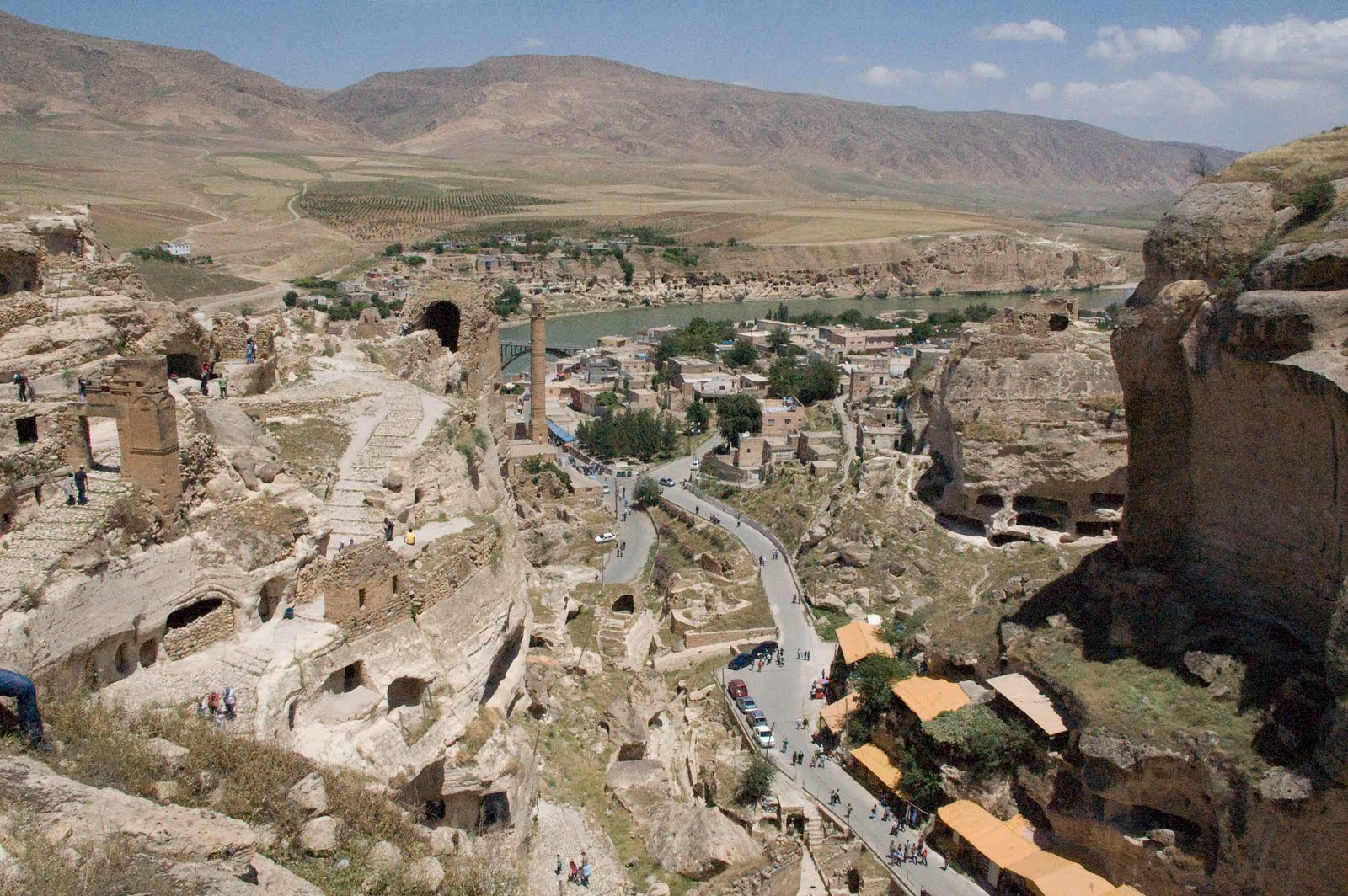
Just last week an International Rivers conference in Turkey focused on the threats to displaced persons and flooded cultural sites in places like the Brazilian Amazon and at Hasankeyf, Turkey, on the Tigris River. One of the most compelling stories in our book emerged from out visit to Hasankeyf. Demonstrators from many nations attending the conference protested at the gates of the Ilisu Dam construction site: See this report from May 21
As the Smithsonian article mentioned, NASA's GRACE satellite is providing documentation of the serious depletion of groundwater aquifers in the Middle East, and also in the Ogallala aquifer of the Great Plains in the U.S., and in California's San Joaquin Valley, all stories that we encountered along our travels. You can read more about the scientific measurements from space that help explain so many on-going human and environmental challenges here.
Lack of Water to Blame for the Conflict in Syria?
which explores the current conflict in Syria and the broader regional tensions in Iraq and Turkey that are driven by too little water leading to refugees moving into cities, and ties to the recent uprising in Syria.
Just last week an International Rivers conference in Turkey focused on the threats to displaced persons and flooded cultural sites in places like the Brazilian Amazon and at Hasankeyf, Turkey, on the Tigris River. One of the most compelling stories in our book emerged from out visit to Hasankeyf. Demonstrators from many nations attending the conference protested at the gates of the Ilisu Dam construction site: See this report from May 21
As the Smithsonian article mentioned, NASA's GRACE satellite is providing documentation of the serious depletion of groundwater aquifers in the Middle East, and also in the Ogallala aquifer of the Great Plains in the U.S., and in California's San Joaquin Valley, all stories that we encountered along our travels. You can read more about the scientific measurements from space that help explain so many on-going human and environmental challenges here.
Saturday, May 18, 2013
Wednesday, May 15, 2013
Glacial Melting in the Karakorum and Pamir Mountains of China
"Climate Change May be Baring Mount Everest" is the headline in a LA Times article of May 14, 2013. Imbedded in that article is a link to a Nature article from last year about "Tibetan Glaciers Shrinking Rapidly." Both stories help clarify the conditions we saw at Oytagh glacier and along the Karakorum Highway in southwestern China during our 38th Parallel travels. We told that story in a post back in May 9, 2011 after visiting the rapidly shrinking Oytagh glacier.
What could be emphasized more in the news stories is the human concern that comes with glacial melting in that region. To reach the mountains we had traveled along the southern edge of the Taklimakan Desert, the southern route of the famous Silk Road which connects a series of oasis towns where water has been critical to locals and travelers for thousands of years. The source of water that creates those oases is the melting snow and ice from the nearby mountains.
The recent research reported in the news stories notes the complexities of documenting impacts in that part of the world, where increased rainfall is coming to some regions influenced by westerly winds out of Europe as a result of global warming, while less falls in other sections of the Tibetan Plateau where the Indian monsoon is the weather-deliverer. The monsoon has been weakening in recent decades.
This week we learned that measurements of atmospheric carbon dioxide are close to the 400 parts per million concentration and continuing to rise. "The weekly average reading at Mauna Loa was 399.52...up nearly 22 points from a decade ago, according to the NOAA." With so little effective action occurring globally to address this trend, the coming decades are going to be very challenging around the world.
What could be emphasized more in the news stories is the human concern that comes with glacial melting in that region. To reach the mountains we had traveled along the southern edge of the Taklimakan Desert, the southern route of the famous Silk Road which connects a series of oasis towns where water has been critical to locals and travelers for thousands of years. The source of water that creates those oases is the melting snow and ice from the nearby mountains.
The recent research reported in the news stories notes the complexities of documenting impacts in that part of the world, where increased rainfall is coming to some regions influenced by westerly winds out of Europe as a result of global warming, while less falls in other sections of the Tibetan Plateau where the Indian monsoon is the weather-deliverer. The monsoon has been weakening in recent decades.
This week we learned that measurements of atmospheric carbon dioxide are close to the 400 parts per million concentration and continuing to rise. "The weekly average reading at Mauna Loa was 399.52...up nearly 22 points from a decade ago, according to the NOAA." With so little effective action occurring globally to address this trend, the coming decades are going to be very challenging around the world.
Tuesday, April 30, 2013
38th Parallel Desal Plant in Spain, Europe's Largest, Nears Completion
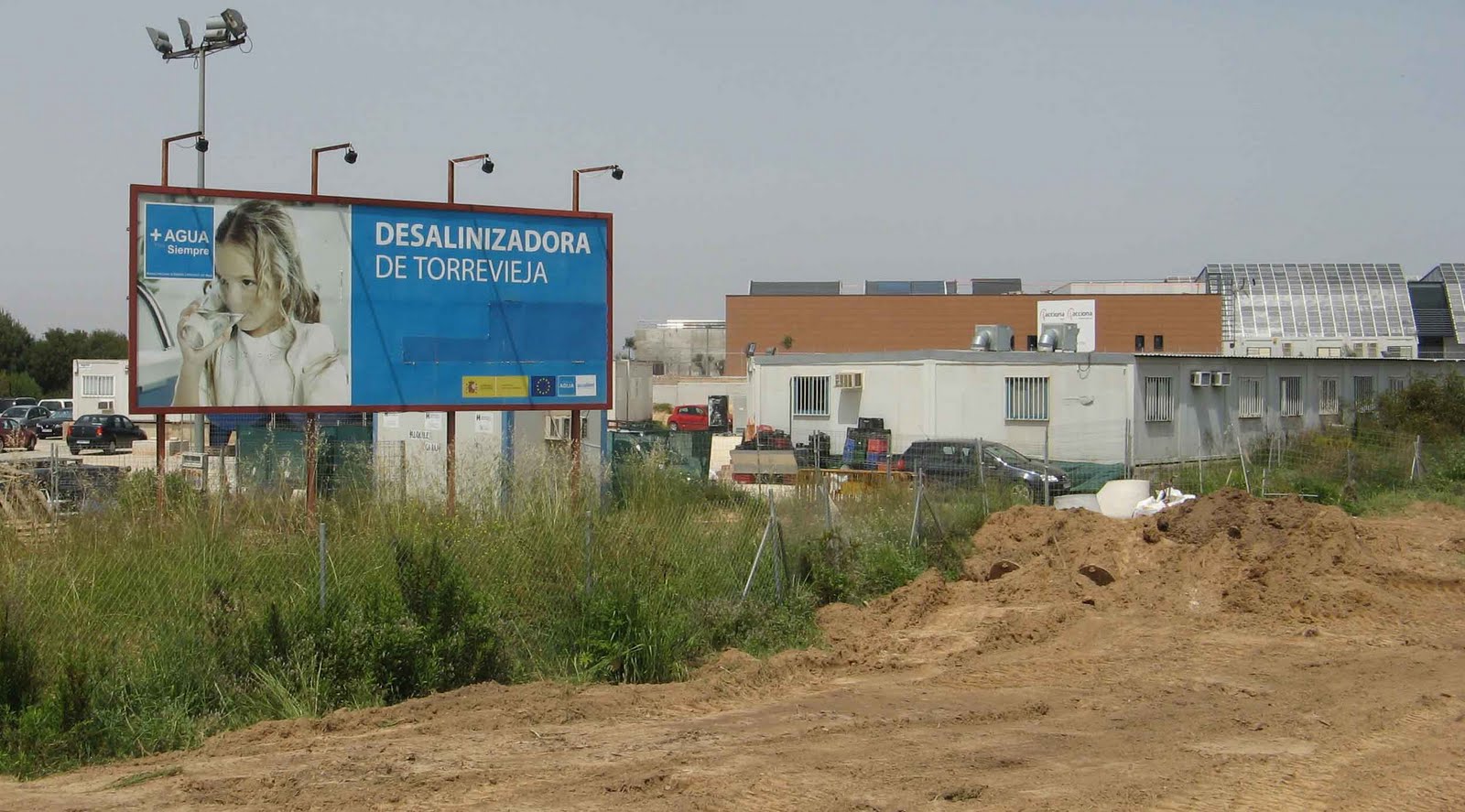
The desalinization plant in Torrevieja, Spain where construction was stalled when we visited that 38th Parallel site (see "Saline lagoons of Spain's Costa Blanca", posted on April 30, 2010) is finally close to completion. In a news story in The Leader on March 3, 2013, we read that "it’s been over ten years since Zapatero’s government first
heralded the new Torrevieja plant as an alternative to the Ebro water
transfer into Murcia and Alicante, and over two years since the main
structure was completed."
At last, the plant, the largest in Europe and second biggest in the world, is within weeks of beginning operation, though "the product may be so expensive that nobody will be prepared to buy it."
As we learned during our travels, Spain decided to invest in desal as an alternative to damming northern rivers and sending more water south via aqueducts, the model they had been following that is so similar to California's history. But the energy and environmental costs of desalinization continue to be major hurdles, particularly when compared to less expensive water conservation and recycling options.
At last, the plant, the largest in Europe and second biggest in the world, is within weeks of beginning operation, though "the product may be so expensive that nobody will be prepared to buy it."
As we learned during our travels, Spain decided to invest in desal as an alternative to damming northern rivers and sending more water south via aqueducts, the model they had been following that is so similar to California's history. But the energy and environmental costs of desalinization continue to be major hurdles, particularly when compared to less expensive water conservation and recycling options.
Thursday, March 28, 2013
South Korea's New Administration Critical of "Green Growth" 4 Rivers Project
Another recent news story related to a topic in our book:
In a Korea Herald article that appeared March 28, 2013, the controversial 4 Rivers Restoration Project that we saw underway while in South Korea and wrote about in TRAVELING THE 38TH PARALLEL is described as coming under criticism and scrutiny by the new President's administration. "President Park Geun-hye and her officials are openly skeptical toward [former President] Lee’s green packages, saying they were too oriented toward economic growth. They hinted at a shift back to the goal of sustainable development, which Lee had ditched as outdated. Government agencies are investigating the controversial river project over not only its negative impact on water quality but also unsavory ties between the government and contractors"
As Chooney Kim, the KFEM environmental NGO activist, told us when we visited, a time when the construction was still not complete, "The government calls this 'green economy,' but has no concern about the ecology. They just keep construction workers busy, busy, busy." Rather than restoration, the work greatly widened, deepened, and channelized the largest rivers in the nation, including the Han River that passes by Seoul.
Despite such criticism, this news article seems to mourn the loss of the nation's"green growth" program, while it also mentions criticism that the new government has faced by environmental groups for not yet articulating a clear environmental program as a replacement. This week, the international media are all focused on the threats of military action by North Korea, understandably, but this on-going debate over the meanings of "green" and "sustainability" continues, nevertheless.
In a Korea Herald article that appeared March 28, 2013, the controversial 4 Rivers Restoration Project that we saw underway while in South Korea and wrote about in TRAVELING THE 38TH PARALLEL is described as coming under criticism and scrutiny by the new President's administration. "President Park Geun-hye and her officials are openly skeptical toward [former President] Lee’s green packages, saying they were too oriented toward economic growth. They hinted at a shift back to the goal of sustainable development, which Lee had ditched as outdated. Government agencies are investigating the controversial river project over not only its negative impact on water quality but also unsavory ties between the government and contractors"
As Chooney Kim, the KFEM environmental NGO activist, told us when we visited, a time when the construction was still not complete, "The government calls this 'green economy,' but has no concern about the ecology. They just keep construction workers busy, busy, busy." Rather than restoration, the work greatly widened, deepened, and channelized the largest rivers in the nation, including the Han River that passes by Seoul.
Despite such criticism, this news article seems to mourn the loss of the nation's"green growth" program, while it also mentions criticism that the new government has faced by environmental groups for not yet articulating a clear environmental program as a replacement. This week, the international media are all focused on the threats of military action by North Korea, understandably, but this on-going debate over the meanings of "green" and "sustainability" continues, nevertheless.
Wednesday, March 27, 2013
Asian Dust in the Eastern Sierra of California
The Sierra Wave news service ran a radio story about the hazy skies recently in the Eastern Sierra, where we live. It is that time of year when the dust storms blow off the Asian deserts; we saw that in action when we were in China.
So we wondered about the Eastern Sierra haze in the air last week, speculating that it might be the Asian spring dust reaching around the globe again. Good to have that confirmed, yet it is not a pretty thing. We are a very connected
world, which is both good and bad and that is one of the key lessons we discovered as we traveled the 38th Parallel around the world. Here's the link to the radio story:
Dust from the Gobi Desert clouds Owens Valley | Sierra Wave: Eastern Sierra News
www.sierrawave.net
Why has our air looked so hazy since last Friday? It was made in China, you might say, and blown across the globe to California.
Wednesday, March 20, 2013
Three hopeful news stories about topics in the book
This week three news stories reported hopeful actions tied to stories we told in Traveling the 38th Parallel. One describes farmers voluntarily cooperating to limit Ogallala aquifer pumping in northwest Kansas, here: "Drought Ravaged Plains Efforts to Save a Vital Aquifer".
And the second tells about conservative outrage over China's involvement in Mountaintop Removal Coal Mining in Kentucky: Motherjones mountaintop-removal-china-conservative.
We'll take all the good news we can get on both topics, which were some of the most disturbing issues we encountered along the 38th Parallel.
And KQED posted this story about San Joaquin River flows that may be adjusted to improve wildlife conditions by a slight increase in spring flows. Good clear coverage by KQED: http://blogs.kqed.org/newsfix/2013/03/19/where-californias-water-future-is-really-being-decided-hint-its-not-about-tunnels/
And the second tells about conservative outrage over China's involvement in Mountaintop Removal Coal Mining in Kentucky: Motherjones mountaintop-removal-china-conservative.
We'll take all the good news we can get on both topics, which were some of the most disturbing issues we encountered along the 38th Parallel.
And KQED posted this story about San Joaquin River flows that may be adjusted to improve wildlife conditions by a slight increase in spring flows. Good clear coverage by KQED: http://blogs.kqed.org/newsfix/2013/03/19/where-californias-water-future-is-really-being-decided-hint-its-not-about-tunnels/
Saturday, March 16, 2013
Interview about 38th Parallel book with CBS radio host Peter Greenberg
The April 16, Saturday morning CBS radio travel show,
hosted by Peter Greenberg, "The Travel Detective," included an interview
with us about the 38th Parallel book. We found the podcast by clicking a link at: Peter Greenberg CBS radio
Our interview came up 54 minutes into the show, right after Peter's segment about the new TSA rules, in the third hour of the show.
Subscribe to:
Posts (Atom)