


Our first taste of Sicily was at Trapani, where we spent a night after our flight from Barcelona. The vegetable gardens and olive orchards reminded Janet of her Italian grandfather. A train took us across northern Sicily to Messina, where the narrow strait between the island and the mainland provides an ideal corridor for migrating raptors to cross the water and head on to nesting sites in eastern Europe. Spring is an especially important time here, and the migration was in full swing. We had arranged to volunteer as counters with Anna Giordano, who had started protecting and counting the raptors 29 years earlier in 1981. There is a nice “camp” which turned out to be a house with a kitchen, dining room and our own private room!
 We spent the morning on a windy ridge (1200 ft elev., 38°16'N; 15°30'E) enjoying a view of snowy Mt. Etna spewing ash and with several of the expert hawk migration counters who had years of experience : Jean Paul Fiott from Malta, who has worked on the count for 10 years, Michele Cento from Rome, who works with the Italian League for Protection of Birds and has done the count for 4 years; and also Sophie Tyldesley, an 18-year old English girl on her first birding adventure.
  In the last 3 days, the complete team of 10 persons had counted 12,000 raptors, with the largest number being honey buzzards, a magnificent hawk that migrates from Africa to Russia. The one day record for April had been smashed this year, with twice as many birds as the previous record, so spirits among the counters were high.
The ridge has been a particularly hot spot for poaching, in the past. Hundreds of the local Sicilians used to shoot thousands of migrating raptors every year, even though they were legally protected in 1977. Anna Giordano, when she was only 15 years old, began a campaign to end the poaching.
 Anna had been a member of the Italian League for Birds since she was 6. At 15, a poacher offered to give her a bag with 3 dead kestrels. She refused and that was the beginning of a battle that ,at times, grew ugly and violent. When they heard shots or saw poachers shooting, in the days before mobile phones, she would drive the long windy road to tell the police, who in the early years were not very responsive.
  The first international camp was in 1984 in a caravan camper, with participants from Malta and Germany. “I have a genetic deviation in my mind that makes me seek the justice that here does not exist. Next time,” she joked, “I want to be born with a passion for stamps instead of birds.” Anna told us about one man she turned in who pleaded with the police and with her, “Don't destroy me. I have a family. I am a father.” She was tempted to be merciful, but looked at the dead honey buzzards and told him, “These were fathers of families too.” There were direct attacks on Anna's house and threats of violence against her. Not until the '90s did the forest officers regularly enforce the anti-poaching laws.
 In recent years, local attitudes have improved. Few shots are fired now, though toward the end of our day two were heard from down in the valley and Anna and Jean Paul raced off to meet the police and try to locate the shooter. Later, she said the shots showed that, apparently 29 years is still not enough. More encouraging are the former poachers who have now taken up birdwatching and photography.
A poacher Anna has dealt with for 25 years recently stopped and said hello and told her, “you were right to protect the birds”. It gave her goose bumps, she told us. Good signs.
Anna's story, documented in Time Magazine and in a British TV documentary called “Anna and the Honey Buzzards” is truly inspirational and reminded us of the successfuly battle to protect Mono Lake and the work of Dave and Sally Gaines. Anna is the spark plug that brought international volunteers to Messina for 29 years to count and protect the birds. Our presence was not so much for our (very limited) raptor expertise but to learn about and help provide international recognition and passion for this amazing spectacle of the spring migration.
“I am convinced that each one can make a difference,” Anna told us, “but I needed the help of more people. It was my place to start a song that became a chorus.” She added: “Never think that a fight cannot be won. Never, never.” Visit the raptor count website at www.migrazione.it
Our next planned adventure was to Athens and Greece, but a general strike closed the airport and we had to go to Plan B. We are now in Kusadasi, Turkey after a long day of flights. It is a wonderful, welcoming place on the Aegean Sea. Tomorrow, Ephesus!!


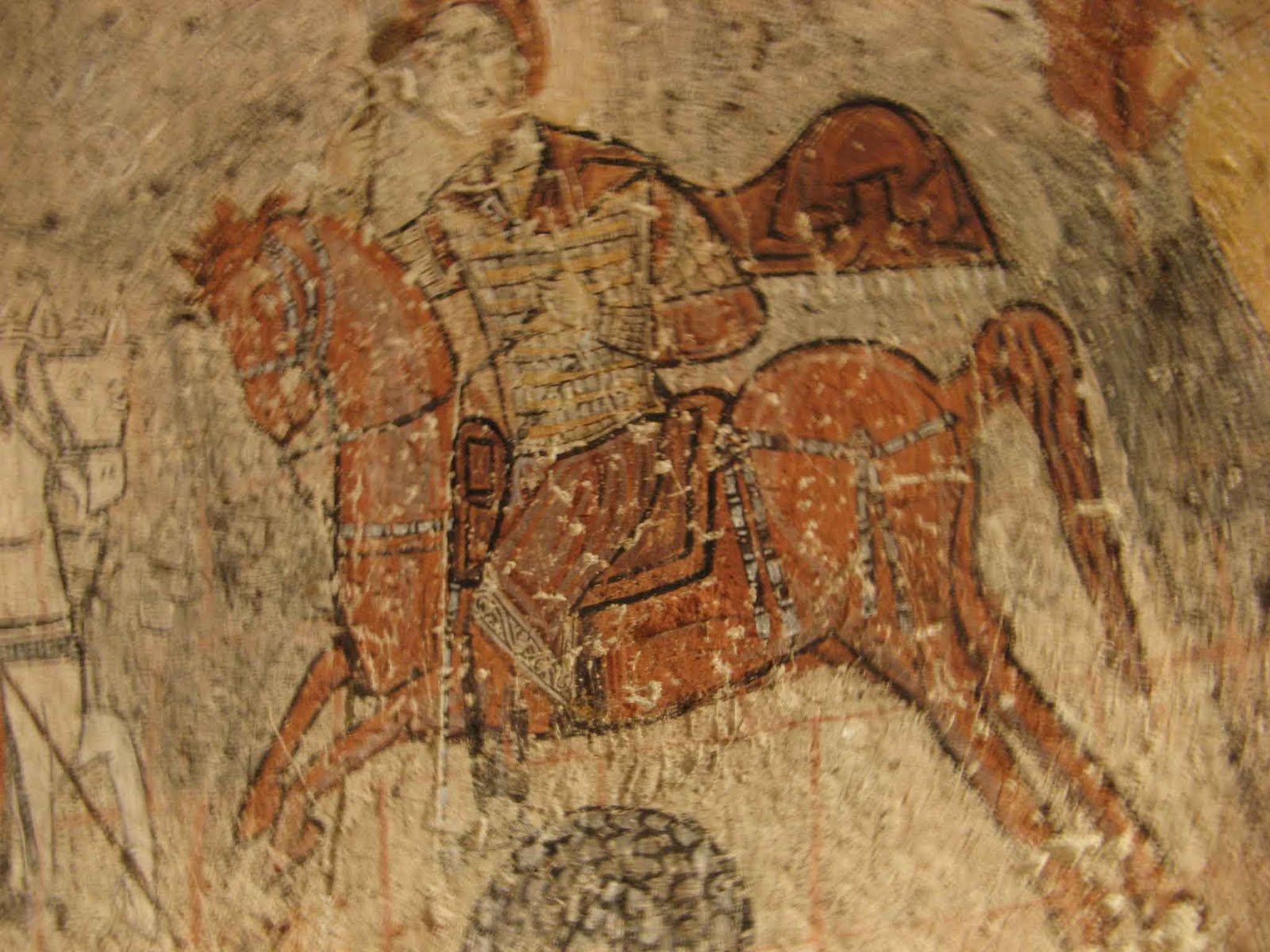 as local people carved caves into the whitish tuff--but around here everyone uses the name "tufa."
  In our many years of telling visitors about Mono Lake's tufa towers--the photogenic limestone formed when springwater and lakewater mix--we often heard about the "tufa" formations of Cappadocia, which actually have more in common with the Bishop tuff formed near Mono Lake by the Long Valley volcanic eruption.
 Visitors may stay in "cave hotels" complete with windows, terraces and satellite dishes. Huge horse stables have been carved into some of the larger rocks.
  Where people have moved out, birds have moved in (we watched a momma bird feed her baby chicks).
  Entire underground cities in multiple layers provided refuge during long ago raids.
  A huge, snowcapped volcano stands sentinel in the distance.

 Wildflowers abounded, with Turkey mullein (that exotic pest at home that is native here) and irises decorating the hillside.
  A fox even gave us a glimpse.
 Camels are a sign of the historic Silk Road connections to China in this part of Turkey.


